

Zagreb & Premantura (Pula), Croatia · 16–18 June 2026
Part One: The 80th Anniversary Ceremony
16 June 2026 · Hotel Sheraton Zagreb
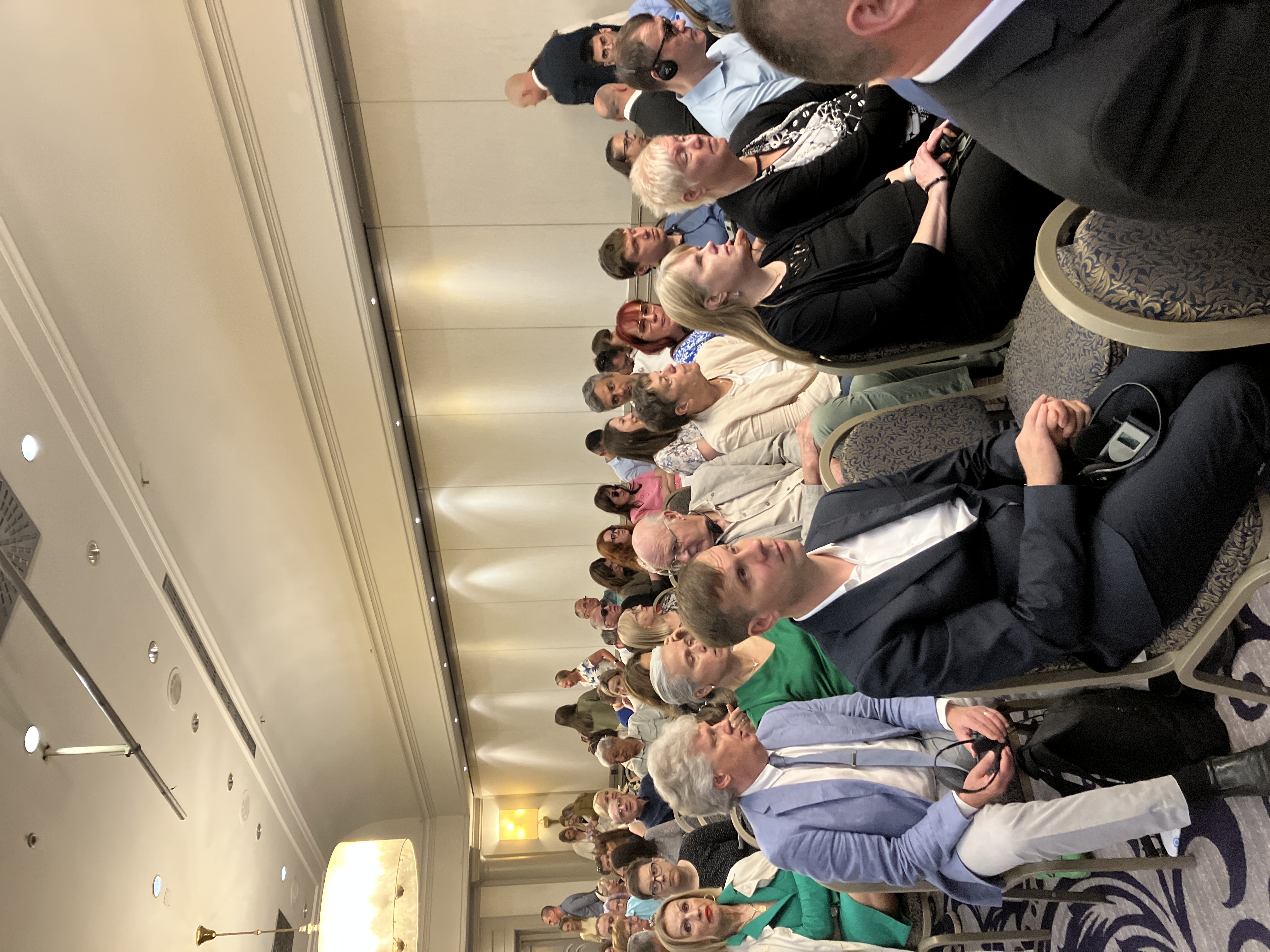
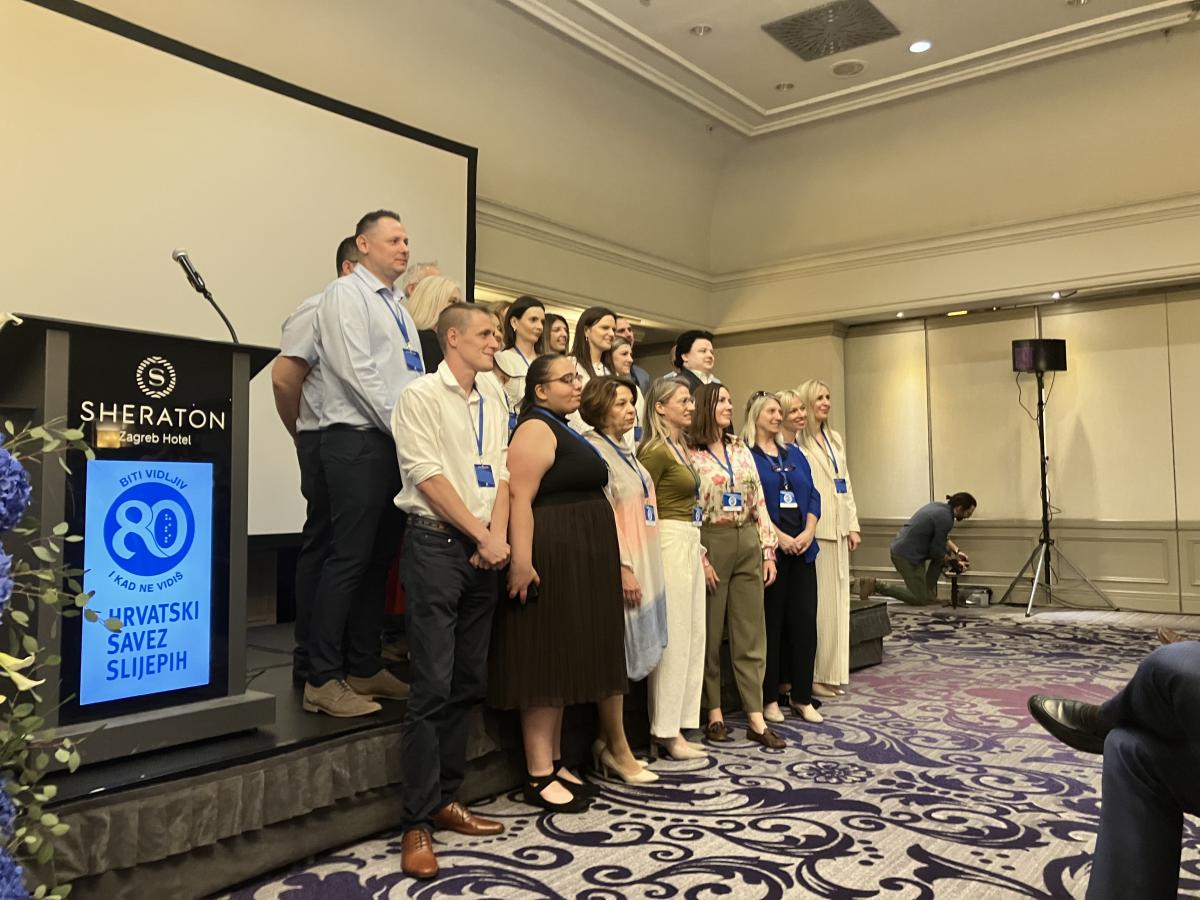
On the morning of 16 June 2026, the Croatian Blind Union (CBU) gathered its members, partners, and distinguished guests at the Hotel Sheraton in Zagreb to mark eight decades of organised advocacy for blind and partially sighted people in Croatia. The ceremony was held under the High Patronage of the Government of the Republic of Croatia, underscoring the significance that this milestone carries both for the disability community and for Croatian civil society at large.
Opening of the Ceremony
The proceedings opened at 11:00 with the performance of the National Anthem of the Republic of Croatia by Emilija Sedlaček, setting a tone of civic pride and institutional solemnity. The formal opening of the ceremony followed five minutes later, welcoming an audience that included representatives from across Croatia's network of 26 local organisations affiliated with the CBU, representatives from the Croatian government, Representatives of the European Blind Union and other guests.
Presidential Address
At 11:10, Kruno Drenski, President of the Croatian Blind Union, delivered the welcome address. He reflected on the Union's journey since its foundation eighty years ago, when it was established as the umbrella organisation for partially sighted people across what was then a very different Croatia. Today the CBU unites more than 5,000 members through its local associations, coordinates a team of 26 professional experts (spanning information technology, social work, law, psychology, rehabilitation, and special education) and leads or participates in an extensive portfolio of national and European-funded projects. President Drenski acknowledged that the real measure of the Union's success lies not in institutional longevity alone, but in the daily quality of life improvements experienced by its members.
Musical Interludes and Artistic Performances
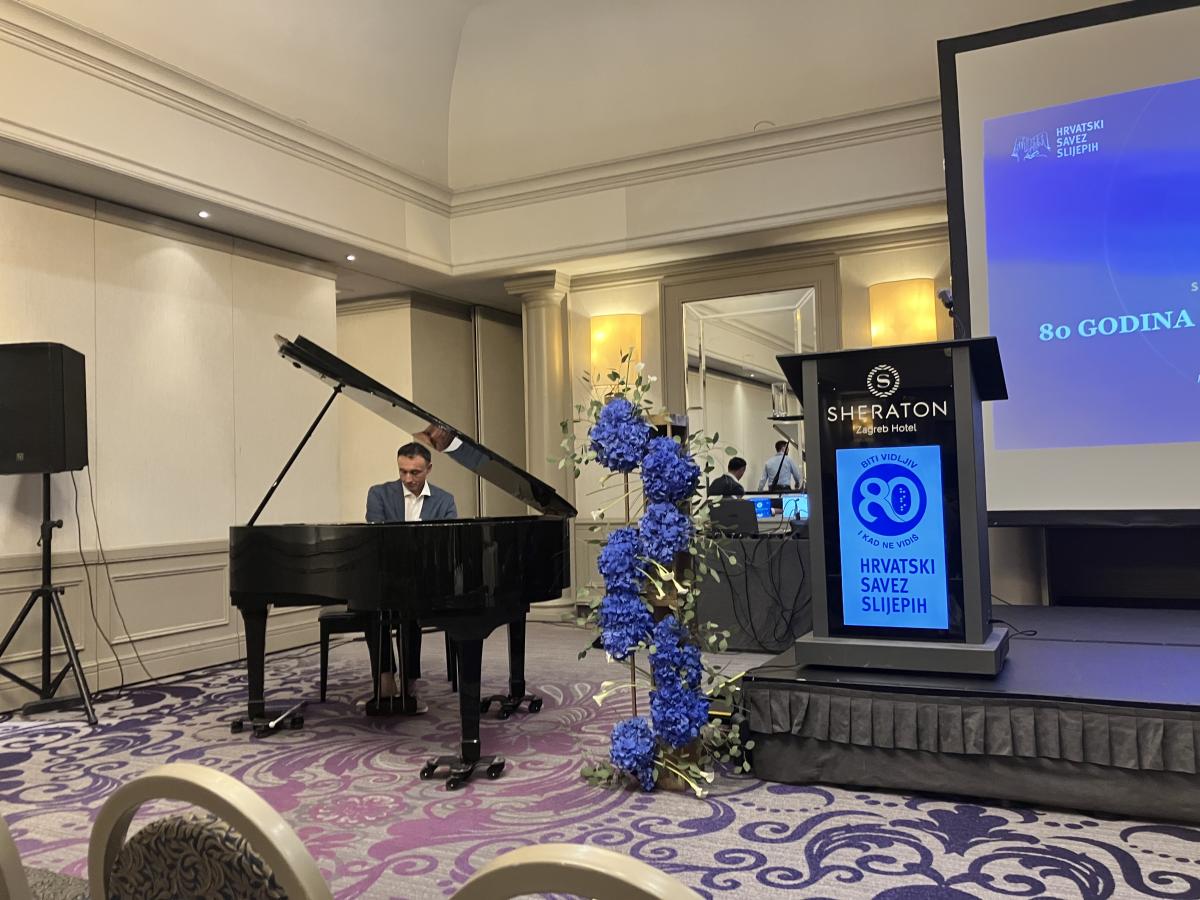
Music wove its way throughout the ceremony, providing moments of reflection and celebration in equal measure. Erik Vrbanec opened the musical programme with a trumpet performance of Yesterday by The Beatles, a piece whose elegiac quality provided an apt meditation on the passage of time. Later, Vojin Perić and Perica Mihaljević offered a combined musical and theatrical performance, with Mihaljević contributing a rendition of Mozart's Alla Turca. The ceremony's musical arc concluded with Miodrag Zajc performing My Way, the Sinatra classic whose message of self-determination resonated strongly in the context of an organisation whose entire mission is rooted in enabling independence for blind and partially sighted individuals.
Guest Addresses
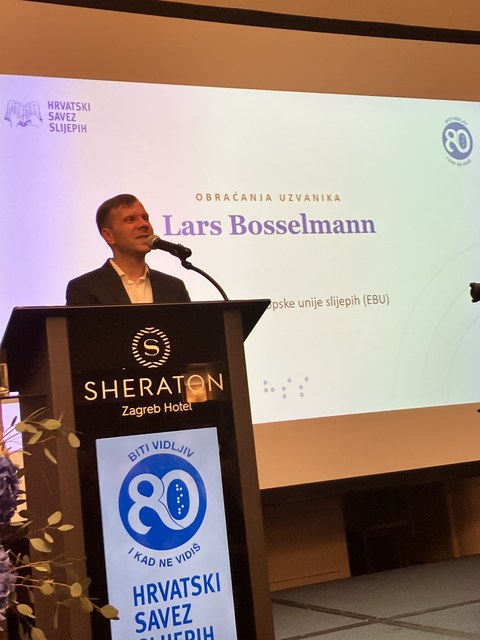
Between 11:20 and 11:40, guests from the Croatian Government and partner organisations offered their congratulations and reflections on the CBU's work and its place within the wider European movement for the rights of blind and partially sighted people. The addresses acknowledged the Union's role as a bridge between grassroots community needs and national policy, as well as its growing profile within the international scene. On behalf of EBU Lars Bosselmann congratulated the Croatian Union for its accomplishments.
Presentation of Certificates of Appreciation and Awards
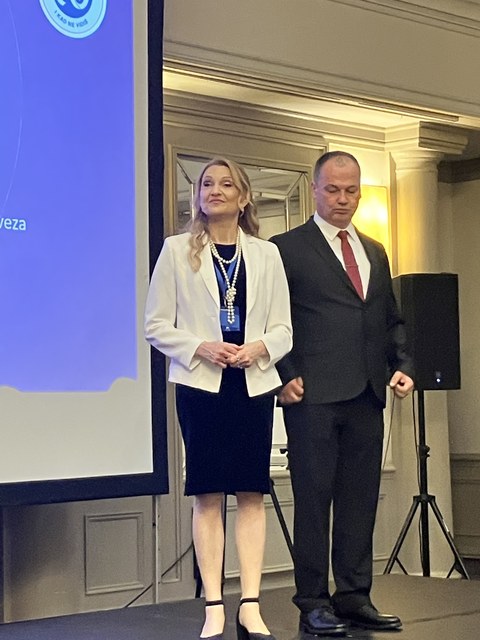
A central moment of the ceremony was the presentation of the Croatian Blind Union's Certificates of Appreciation and Awards, which took place between 11:50 and 12:10. These honours recognise the exceptional contributions of individuals and organisations (members, staff, volunteers, and partner institutions including EBU) whose dedication has helped shape CBU into the organisation it is today. The award ceremony served as a reminder that behind every institutional milestone are the accumulated efforts of countless people.
Anniversary Film and Closing
At 12:15, guests were invited to view a specially commissioned film marking the 80th Anniversary of the Croatian Blind Union. The screening offered a visual and narrative journey through the organisation's history, capturing key moments of advocacy, community building, and service delivery across eight decades. The ceremony was formally closed at 12:40 by Andreja Veljača, Executive Director of the CBU, whose closing address looked forward, articulating ambitions for the Union's next chapter with the same energy that has characterised its past.
Exhibition: 80 Years Through 8 Stories
Following the ceremony, guests were invited to attend the anniversary exhibition, titled 80 Years Through 8 Stories, hosted at CBU's headquarters, located just around the corner from the Sheraton Hotel. The exhibition brought together eight narratives representing defining chapters of the CBU's history. A shared lunch reception in the premisses allowed guests, members, and international colleagues to exchange experiences in an informal setting. Simultaneous English interpretation was provided throughout the entire programme, ensuring full accessibility for the international guests who would be continuing to Premantura the following day for the EBU LEC meeting.
Part Two: EBU Leadership Exchange Committee Meeting
17–18 June 2026 · Premantura (Pula), Croatia
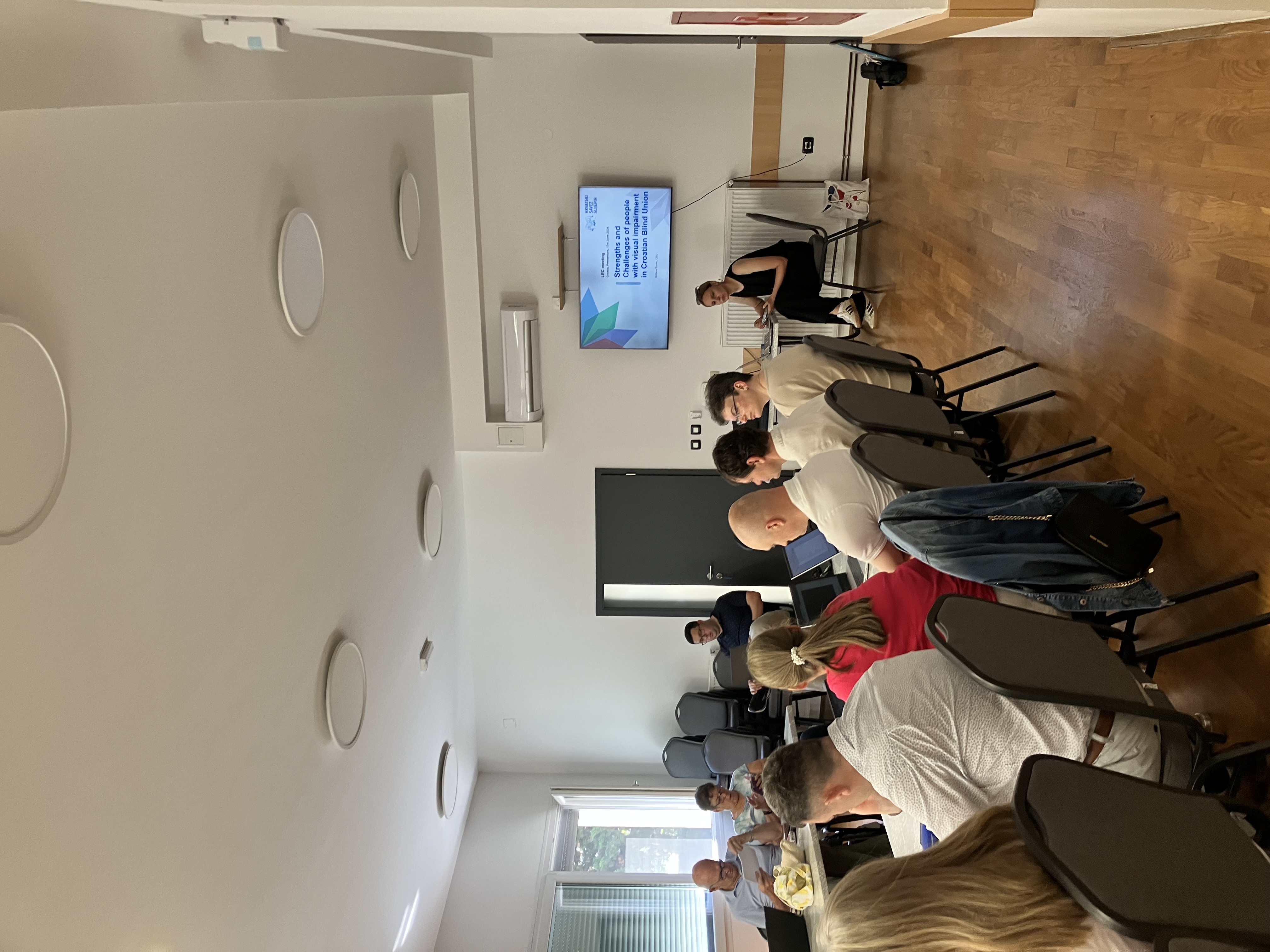
The anniversary celebrations provided the context and the spirit for the EBU Leadership Exchange Committee (LEC) meeting that followed on 17 and 18 June 2026 in Premantura, near Pula on the Istrian coast. The LEC brings together executive leaders from EBU member organisations across Europe, and this edition attracted participants from Croatia, Denmark, Estonia, Finland, the Netherlands, Norway, Poland, Spain, Germany, the United Kingdom, the Czech Republic, Lithuania, Latvia, Slovenia, and Sweden, as well as EBU's Executive Director and Membership Officer. The Croatian Blind Union was represented by its President Kruno Drenski, Executive Director Andreja Veljača, and colleagues Srđana Šimac, Antonija Papić, and Dario Cavar.
Wednesday, 17 June 2026
Opening and Presentation of the Croatian Blind Union
The meeting opened at 9:30 with welcome remarks and practical housekeeping. The first substantive item was a comprehensive presentation of the Croatian Blind Union delivered by Srđana Šimac, setting CBU's work firmly in its national and European context.
CBU was described as an umbrella organisation with 26 local associations and over 5,000 members, pursuing a wide mandate that spans advocacy, legal rights, social services, rehabilitation, assistive technology, culture, and sport. One of the most discussed service innovations is the Seeing Assistant (SA) programme (a service that was long project-funded but has now, through the CBU's sustained advocacy, been enshrined as a legal right in Croatia.) The CBU holds a licensed programme to train Seeing Assistants, and within one year of implementation approximately 180 assistants have been deployed. The service is demand-assessed, with each partially sighted person receiving between 40 and 60 hours of assistance, structured as a right to the service rather than to a specific individual, which ensures continuity of cover.
Participants from across the LEC engaged actively with questions about the funding model, wages, geographic coverage, and whether similar frameworks existed in their own countries. It was noted that low compensation rates (at €11 per hour) risk undermining quality and availability, and the challenge of coverage in smaller and more remote areas. The discussion reflected the familiar tension in social services between the recognition of rights and the resources needed to implement them meaningfully.
Srđana Šimac also highlighted the CBU's strong project track record (more than 140 national and EU projects over 25 years) achieved without a dedicated project-writing department, through multidisciplinary teamwork and a deep understanding of grassroots needs. Current projects include the Lumina Centre for Education and Professional Support (ESF+), a pilot mobile rehabilitation team travelling to remote parts of Croatia, and the Youth Impact Project connecting young people with visual impairments across the Balkans, including partners in Slovenia, Bosnia, Montenegro, and Cyprus.
The assistive technology dimension was introduced by Dario Cavar, who described the work of Typho (originally founded by the CBU and still closely linked) in providing assistive devices, accessible information, and accessibility consulting for banks, airports, museums, hospitals, and tourist facilities. CBU's accessibility advisory work is offered for free, while concrete implementation work is remunerated. A lively exchange followed on the CBU's signature activity: talking darts, a sport developed in-house and now the most popular adapted sport in Croatia for partially sighted people.
Members Presentations
White Paper: A Call-to-Action on Vision Health in Central and Eastern Europe
After the coffee break, the floor was given to members. Ivica Belina of the CBU presented online a White Paper titled A Call-to-Action to Preserve Vision, Unifying Advocates to Empower and Ignite Change Across Central and Eastern Europe. The paper sets out a series of calls to action structured around prevention, early diagnosis, timely rehabilitation, and the guarantee of rights for people across the vision-loss spectrum. Due to some technical issues, the communication had to be stopped, and the slides read out loud in the room instead. The discussion that followed touched on the importance of preventive investment, the challenge of rising screen use among young people and its potential links to vision disorders, and the value of using such advocacy tools at the government level. Participants requested that the slides be shared, and further questions were directed to Ivica Belina for follow-up.
One Hundred Years of the White Cane
Christianne Moëller of the DBSV presented online on the centenary of the original white cane, which falls on 7 February 2031. The presentation traced the origins of the modern white cane to the early twentieth century (including a young man from Bristol who painted his stick white to be visible to motorists, and a French aristocrat in the 1930s who championed the white cane through media campaigns and distributed several thousand canes across France.) Today's global symbol of blind independence has its roots in these individual acts of ingenuity and advocacy. The centenary in 2031 presents an opportunity for coordinated European celebration, including proposals to illuminate the Eiffel Tower and Champs-Élysées in white and link the initiative to mobility training and global distribution of canes in countries that still lack access.
The discussion was rich and wide-ranging. Representatives noted differences in white cane culture across Europe, including the legacy of Soviet-era reluctance to use the cane in former Eastern Bloc countries, the variety of cane colours across different national contexts (red-and-white, green in Argentina), and the particular significance of the cane for partially sighted people who may use it to signal their needs in public. Sweden noted that while partially sighted people may be reluctant to use a cane, it offers a critical means of independent mobility. Latvia underlined ongoing advocacy to encourage use and to have the cane recognised as a social rehabilitation tool covered by government funding. The Netherlands developed a white cane with light as a solution for using the cane in the dark. A connection was also noted between the centenary and the existing, US based annual celebration on 15 October (White Cane Safety Day), suggesting the 2031 centenary could serve as a second, European-branded moment on 7 February. The EBU's Lars Bosselmann indicated he would explore official channels in France to help mobilise partners for any Paris-based events.
Workshop: The Use of Artificial Intelligence in Member Organisations
The afternoon was devoted to a two-hour workshop moderated by Jesper Bentil Holten of the Danish Association of the Blind, exploring how member organisations are currently using artificial intelligence, the benefits and risks emerging from its expanding role in society, and what role EBU might play in supporting members on this issue.
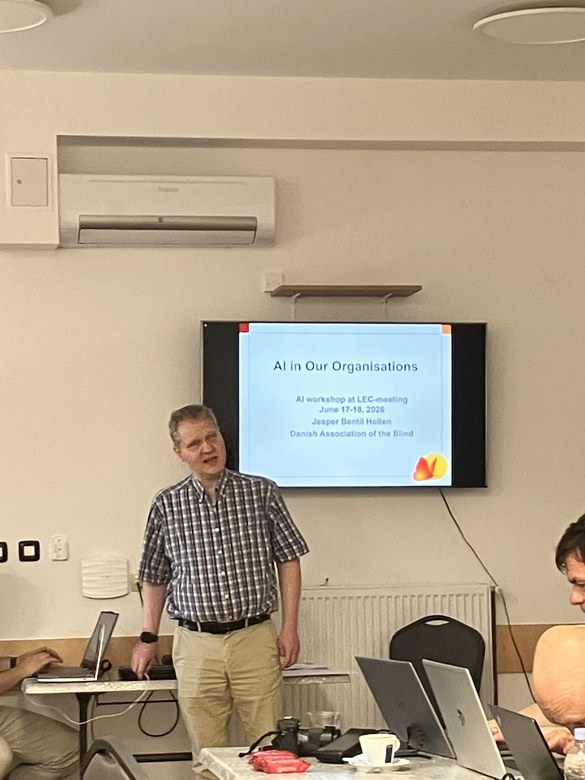
Working groups reported back with a rich and nuanced picture. Current uses include drafting presentations and meeting notes, producing translations, generating press releases, and summarising transcripts. AI agents are being used to take actions autonomously (uploading content to websites, structuring data) and tools like co-pilots are in widespread licensed use in some organisations. The ONCE colleague noted monthly AI training sessions for all staff to keep pace with rapid development.
Concerns raised were equally substantive: data protection and institutional trust in AI systems; the risk that AI may widen rather than narrow digital divides, particularly for older members; language equity challenges for smaller European languages that perform poorly in current models; and the risk of AI hallucinations in factual outputs. Jakob Rosin of the Estonian Blind Union raised a critical point about image description (even AI systems that can describe images are increasingly declining to identify gender or describe sensitive content, which can strip them of practical utility for blind users who need full contextual information)
The group discussed what EBU could do collectively: advocacy with model developers such as Anthropic and others to ensure disability training is embedded in model development from the outset; a position paper on AI and disability rights; a shared platform or web resource where members can exchange good practices; and influencing EU AI legislation through the European Disability Forum. Javier from ONCE highlighted the EU AI Act and the office advising the European Council on AI as priority vehicles for disability rights advocacy. The workshop concluded with a call for EBU to take on a mouthpiece role in this advocacy, ensuring that the agenda is driven collectively rather than organisation by organisation.
EBU Operational Structures Update
The evening session covered EBU operational matters. EBU Membership Officer Valérie Bertrand-Vivancos presented an overall update of the Discussion Lists, with a focus on the Members Forum and encouraged members to contribute to the new Members Newsletter. Jakob Rosin provided an update on the merged Accessibility Working Group (integrating digitalisation and mobility), which he now leads. Merve Maassen of DBSV reported on work with industry on silent cars. Updates were also shared on the use of the EBU Members Forum as a channel for partnership-building (for example, a proposed Erasmus+ project on volunteer management with Finnish and Slovenian partners) and on the new Members Newsletter, which is being redesigned with new sections to better reflect the diversity of member activities.
Dick van den Bran raised the issue of increasing high myopia, which has been a focus of a working group in the Netherlands, as an addition in the discussion of a project also related to age: the rising problem of sight loss by elderly people in the eastern countries of Europe.
The working day concluded at 18:00, followed by dinner and an opportunity for participants to test the CBU's innovative talking darts.
Thursday, 18 June 2026
EBU General Assembly Preparations
The second day opened at 9:00 with a substantial discussion on preparations for the 2027 EBU General Assembly (GA). Lars Bosselmann outlined the current thinking: the GA will be streamlined to approximately one and a half days, with a strong focus on statutory items (elections, reporting, constitutional business, strategy, and resolutions) and without side events nor cultural visits. Electronic voting will be tested and piloted at the Advocacy Committee and will likely have an analogue back-up. The aim is to reduce costs and increase efficiency while maintaining the seriousness and legitimacy of the assembly.
A recruitment campaign is underway for a Brussels-based EU Policy Officer, with office space secured in the heart of the EU district. The role requires proximity to EU institutions; Lars Bosselmann confirmed that some remote arrangements may be acceptable, though presence in Brussels is strongly preferred. An earlier recruitment round was unsuccessful; the search continues, ideally with a blind or partially sighted candidate. Support will be available from a Flemish blind organisation sharing office space. Members were invited to share the posting widely.
On membership fees, Lars indicated that the Board presented a revised framework based on a combination of GDP per capita and the Human Development Index to assign member organisations to fee categories. Under the proposal, 35 of the current members would see no change; five countries (Iceland, Slovenia, Belgium, Cyprus, and Latvia) would move to a higher category, though all retain the right to apply for fee reductions. Implementation would not occur before 2028, allowing time for consultation and GA approval. Members welcomed the objective criteria while requesting clarity on reduction conditions and processes.
Constitutional amendments were outlined as an agenda item for forthcoming webinars. Items under consideration include: the number of official languages (currently English, French, German, and Russian, with debate about whether Russian remains appropriate given geopolitical changes and whether the list should be simplified to English as the working language); the number of delegates per member organisation at the GA (currently six, with discussion about reducing this to two or three); and the status of Honorary Life Members. More amendments will be shared through the autumn webinar cycle, with materials due to members by end of June 2027 to allow proper deliberation ahead of the GA.
On strategy, the Board is commissioning a situational analysis (covering the external political and funding environment, membership diversity, and the future shape of the federation) to underpin the next strategic plan covering 2027–2031. Consultations with member organisations and committees are planned through online meetings and questionnaires in the autumn, with an external evaluator involved. The aim is to produce a strategy that makes clearer choices and is more operationally actionable than its predecessor.
EBU Accessibility, Inclusion, and DEIC Policies
Polona Car Djuric (Slovenian Association of the Blind), Chair of the Diversity, Equity, Inclusion Committee (DEIC), presented two new policy documents being finalised by EBU: a Code of Conduct (covering anti-harassment, conflict of interest, and behavioural expectations for all EBU events and activities), and an Accessibility and Inclusion Policy with a specific focus on employment and affirmative action in recruitment.
The Code of Conduct is due to be presented to the Board for approval at its next online meeting. It establishes a tiered process for handling complaints: direct resolution where possible; escalation to the EBU President; engagement of an external expert body for more serious matters; and ultimately referral to local law enforcement if required. Each EBU event will designate a facilitator trained in the Code. The DEIC will continue to update the document around each GA cycle. Several participants noted the value of external resolution options while emphasising the importance of trying internal routes first, notably for cost saving.
The Accessibility and Inclusion Policy will formalise a commitment to employing partially sighted people at EBU, moving from informal practice to written policy. A small taskforce (comprising Sari Kokko, Christianne Moëller, Kannarath Meystre, and Lars Bosselmann) will prepare a draft over the summer for consultation at the LEC level and adoption by the Board before year end. Nordic members noted parallel discussions in their own contexts and offered to share comparative notes.
Any Other Business and Conclusion
The meeting concluded at 12:30 with any other business items. Javier Güemes from ONCE offered Spain as the host country for the next LEC meeting, with Madrid, Barcelona, or Malaga proposed as potential venues, including visits to ONCE facilities. The dates were provisionally set for 13–14 April 2027.
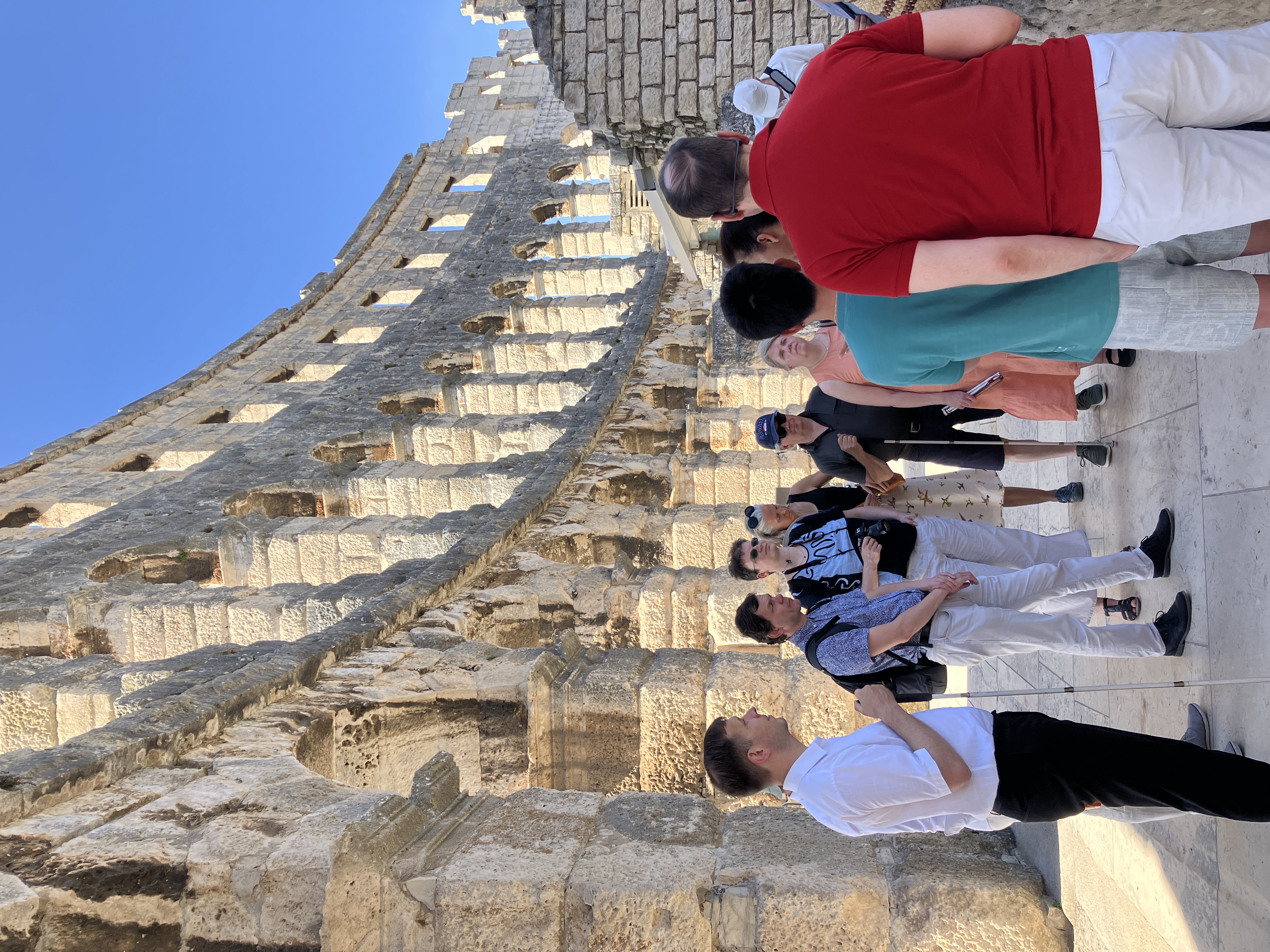
Following the formal close of the programme, participants joined a lunch before an optional afternoon guided cultural visit to the historic town of Pula. A number of delegates departed directly, while approximately half of the group extended their stay by a day or two to enjoy the Croatian coast, with appreciation noted for the accessible Munte beach in the Premantura area.
Overall Reflection
Taken together, the two days in Zagreb and two days in Premantura offered a rare and well-designed combination: a moment of institutional celebration grounded in genuine history, followed immediately by substantive European-level dialogue on the most pressing issues facing blind and partially sighted people and their organisations today. The Croatian Blind Union (at once the host, the honoured institution, and an active contributor to every discussion) demonstrated the range and depth of its work in a way that was both inspiring and practically instructive for its European counterparts.
The LEC meeting itself was characterised by an unusually high level of engagement across all agenda items. Whether discussing the future of AI, the symbolism of the white cane, the mechanics of membership fees, participants brought concrete experience, genuine curiosity, and a collaborative spirit. The decision to situate the LEC meeting immediately after the anniversary celebrations was an inspired one: it connected the historical context of what the EBU's member organisations have built with the strategic relevancy of what they must now build together.