

Overview
On September 22 to 24, the European Blind Union (EBU) was represented by Valérie Bertrand-Vivancos, Membership Officer, during a visit to the Romanian Association of the Blind (Asociația Nevăzătorilor din România, ANR) in Bucharest. The visit coincided with the Association’s anniversary celebrations and General Assembly, offering a valuable opportunity to learn more about one of the oldest and most influential organisations of blind and partially sighted people in Eastern Europe.
A Rich Historical Heritage
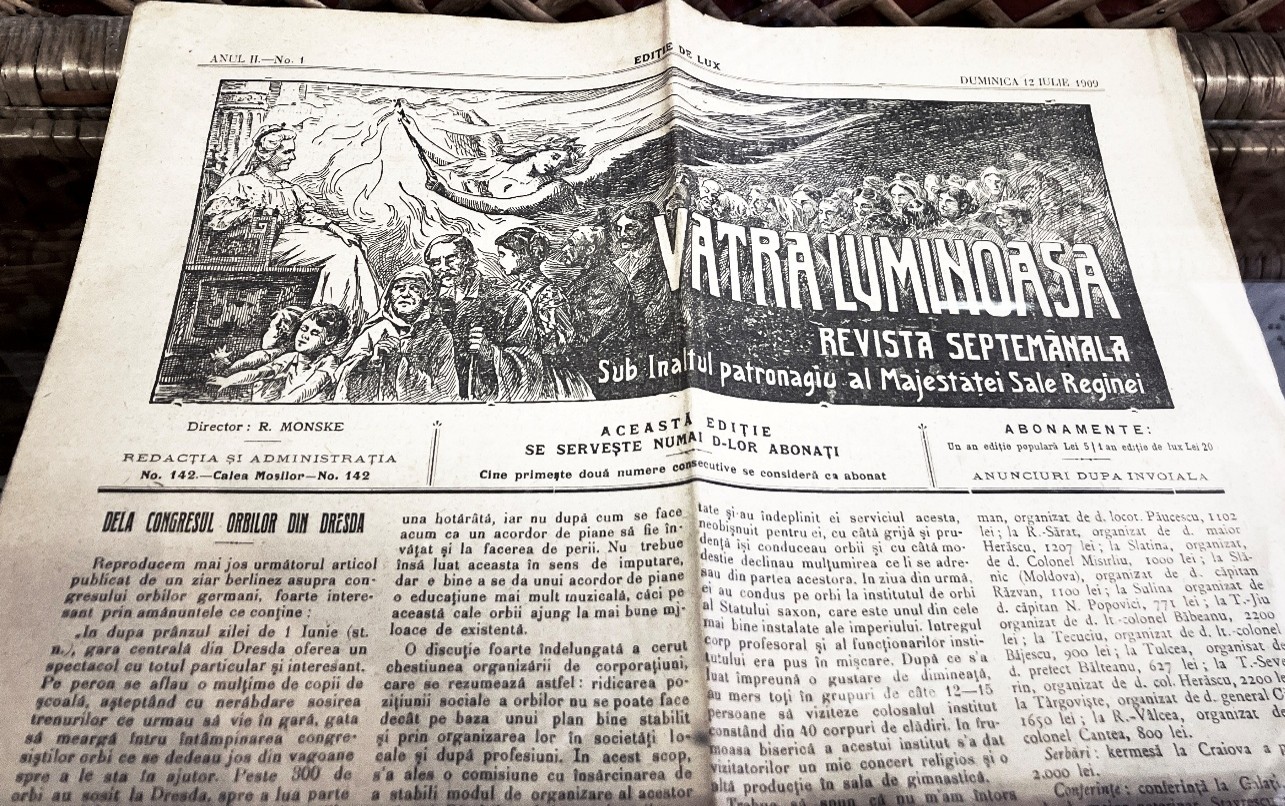
Early 20th Century Vatra Luminoasă Newspaper
The Romanian Association of the Blind traces its roots back to 1906, when it was founded under the patronage of Queen Elisabeth of Romania, known by her literary name Carmen Sylva. The organisation emerged from a vision that people who were blind or partially sighted should have access not only to care and protection, but also to education, culture and meaningful participation in society.
One of the Association’s most remarkable achievements during its early years was the creation of the Vatra Luminoasă institution between 1908 and 1912. More than a residential facility, it combined housing, medical support, a school and vocational workshops, including a Braille printing press. Over time, the name “Vatra Luminoasă” (which can be translated as “lighthouse” or “luminous home”) became associated with the entire surrounding district of Bucharest, a unique example in Europe of a neighbourhood named after an institution serving visually impaired people. Today, the Association’s headquarters remain located in this historic area.
Like many civil society organisations in Eastern Europe, the Association faced major disruptions during the communist period. It was dissolved in 1949 and later re-established in 1956 before adopting its current name in 1963. Despite political constraints, it continued to defend educational opportunities for blind people and remained an important voice for the community. Following the democratic changes of 1989, the organisation modernized its services, developed Braille and audio-book production, contributed to assistive technology initiatives and played a key role in advocating for disability rights and social inclusion.
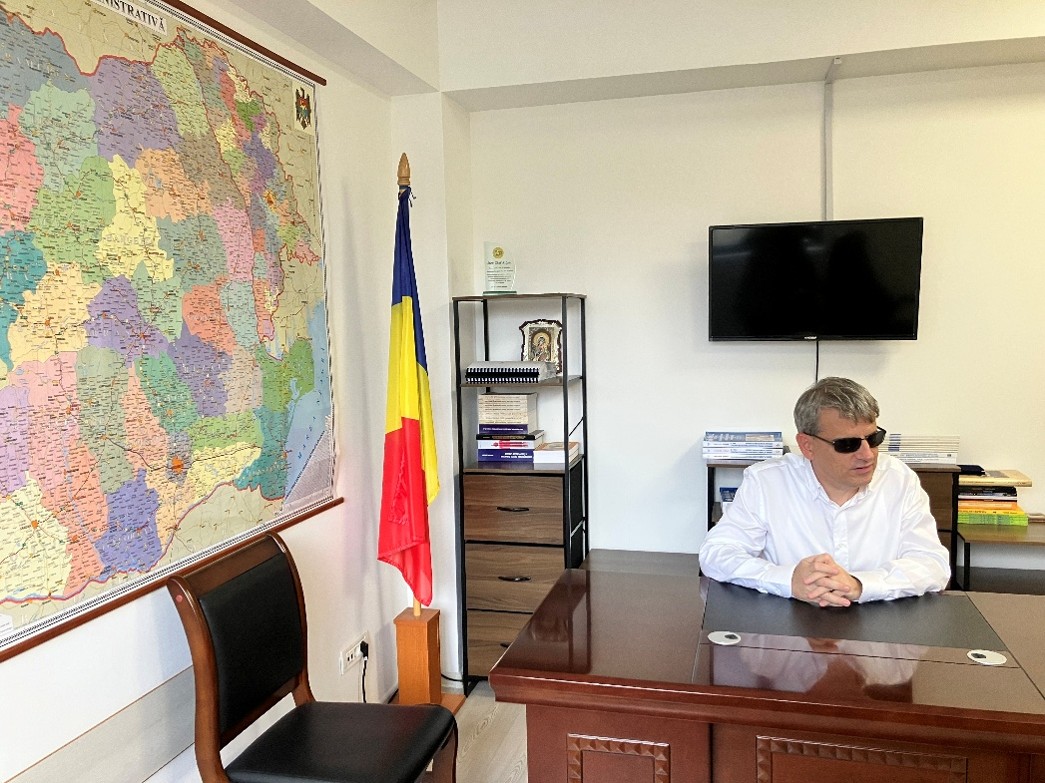
Mihai Dima, President of the Romanian Association of the Blind in his office
Today, the Romanian Association of the Blind is recognised as a national public utility organisation representing blind and partially sighted people throughout the country. It is affiliated with the European Blind Union, the World Blind Union, the European Disability Forum and the National Disability Council of Romania. Its activities span social services, accessibility, education, vocational training, culture and sport. The organisation operates through a national structure that includes a General Assembly, a National Board and county branches across Romania.
Anniversary Celebrations at Vatra Luminoasă
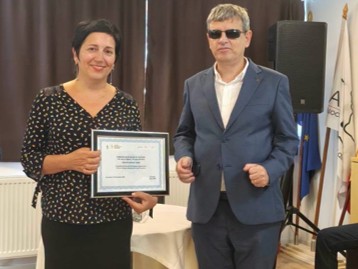
EBU being presented with a certificate of gratitude for its support by President Dima
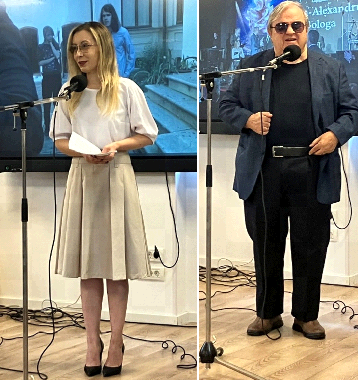
Speeches of Oana Bălinișteanu, First Vice-President and Radu Sergiu Ruba, former President of the Romanian Association of the Blind
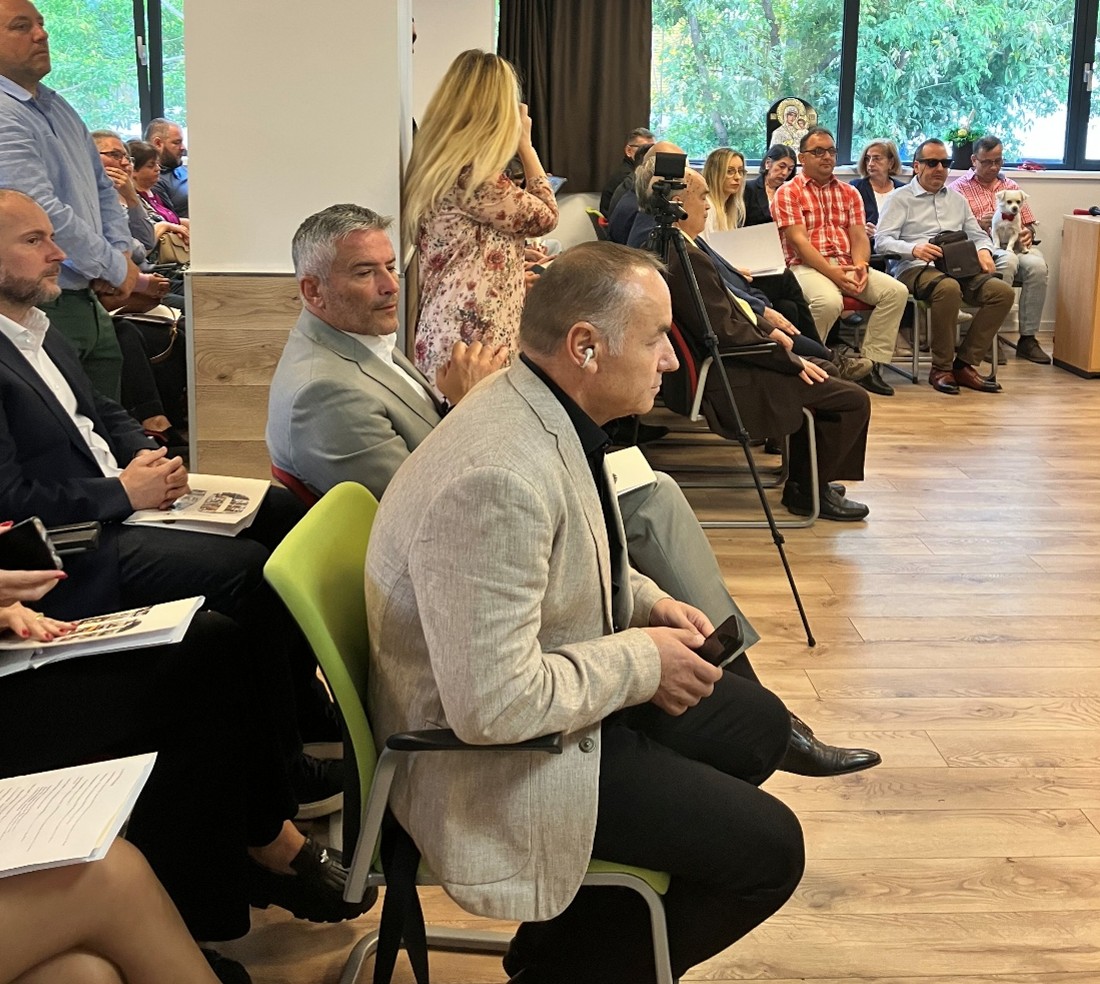
part of the audience, including Tudor Tupiluși former President of the Romanian Association of the Blind
The central event of the visit took place on 23 September at the Association’s headquarters in Vatra Luminoasă and followed a visit of all the association’s new building and its departments (Administrative, Legal, Technical, Cultural, Sports…)
Representatives of national and local authorities, disability organisations, cultural institutions and civil society gathered to celebrate the Association’s achievements and its continuing role in advancing the rights of visually impaired people in Romania.
The event was opened by Mihai Dima, President of the Romanian Association of the Blind, together with Oana Bălinișteanu, First Vice-President, and Silviu Vanda, Vice-President. The programme highlighted the Association’s history, current projects and future priorities, while recognising the contributions of previous leaders and distinguished members. Among those present were former presidents Radu Sergiu Ruba, writer and journalist, and Tudor Tupiluși, whose leadership contributed significantly to the development of the organisation.
The cultural dimension of the Association's work was also strongly represented. Izabella Dumitra, Head of the Cultural Service, showcased the organisation’s extensive cultural activities, including Braille publishing, audio-book production, literary competitions and initiatives promoting equal access to information and culture. These programmes remain a defining feature of the Association and demonstrate that participation in cultural life is an essential component of inclusion.
The celebration brought together an impressive group of public officials and partners, including Dan Cristian Popescu, General Councillor of the Municipality of Bucharest; Rareș Hopincă, Mayor of District 2; Sterică Fudulea, President of the Economic and Social Council; Derzsi Ákos, Secretary of State at the Ministry of Labour, Family, Youth and Social Solidarity; Roxana Gabriela Dobrin, Secretary General of the National Authority for the Protection of the Rights of Persons with Disabilities; and Diana-Ștefana Băciuna, Secretary of State at the Ministry of Culture. Their presence reflected the recognition that the Association enjoys among Romanian institutions and highlighted the importance of partnership in advancing accessibility and equal opportunities.
Representatives of the wider disability movement also attended, including Daniela Tontsch, President of the National Disability Council of Romania; Daniel Lolici, President of the National Association of the Deaf in Romania; and Bakó Szabolcs, Secretary General of the Romanian National Paralympic Committee. Their participation underscored the shared commitment of disability organisations to advocacy, accessibility and social inclusion.
The event was featured on national television and can be viewed through this short youtube video (in Romanian, no audio-description): Watch the video on Youtube
As representative of the European Blind Union, Valérie Bertrand-Vivancos delivered a message of congratulations and solidarity, emphasising the importance of cooperation among national member organistions and celebrating the Romanian Association’s contribution to the European blind and partially sighted movement.
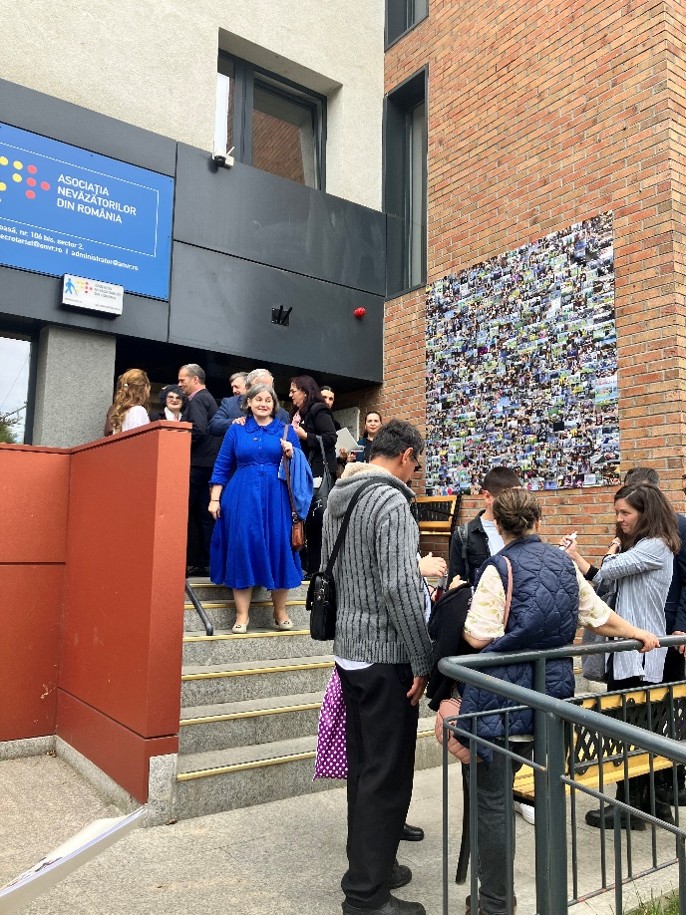
Guests and participants outside the headquarters of the Romanian Association of the Blind
Cultural Encounters and the General Assembly
The programme extended beyond the anniversary celebration itself. Following the official event, participants had the opportunity to exchange views and experiences in a more informal setting. A luncheon brought together guests and members of the Association, including Radu Sergiu Ruba, whose career as a writer, journalist and disability advocate illustrates the close links between culture and activism within the Romanian blind community.
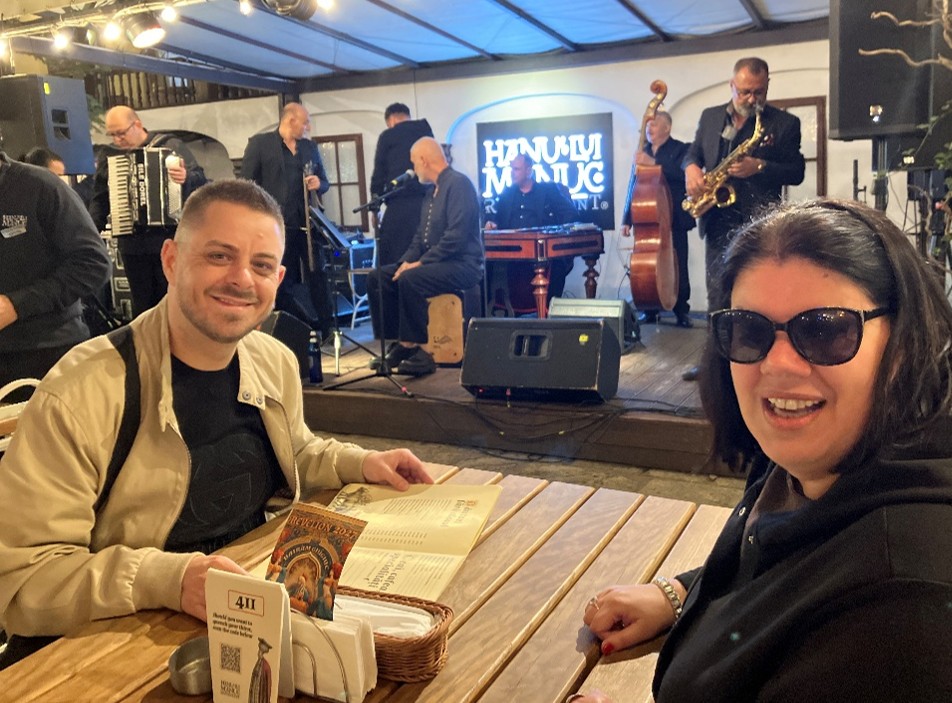
In the evening, guests attended a performance of traditional Romanian music at the historic Hanul lui Manuc, one of Bucharest’s best-known landmarks. The event provided a rich cultural experience and highlighted the importance the Association places on preserving and promoting national heritage while ensuring that blind and partially sighted people can participate fully in cultural life. Izabella Dumitra accompanied the delegation and contributed to the programme’s cultural dimension.
 .
.
Izabella Dumitra, Head of the Cultural Service, inviting guests to a performance of traditional Romanian music at the historic Bucarest landmark, Hanul lui Manuc
The following day, the delegation attended the General Assembly of the Romanian Association of the Blind at the Continental Forum Hotel. Representatives from 33 regional branches, representing 20 000 members out of 80 000 visually impaired individuals throughout the country, gathered to discuss priorities, review activities and shape the future direction of the organisation through elections of its board. The Assembly demonstrated the democratic structure of the Association and the active engagement of its membership network across Romania. On behalf of EBU, Valerie Bertrand Vivancos delivered another address to delegates, encouraging to engage in advocacy and activities at European levels and join counterparts in other national associations to make Romania’s voice heard, share good practices, solve challenges through pooled resources.
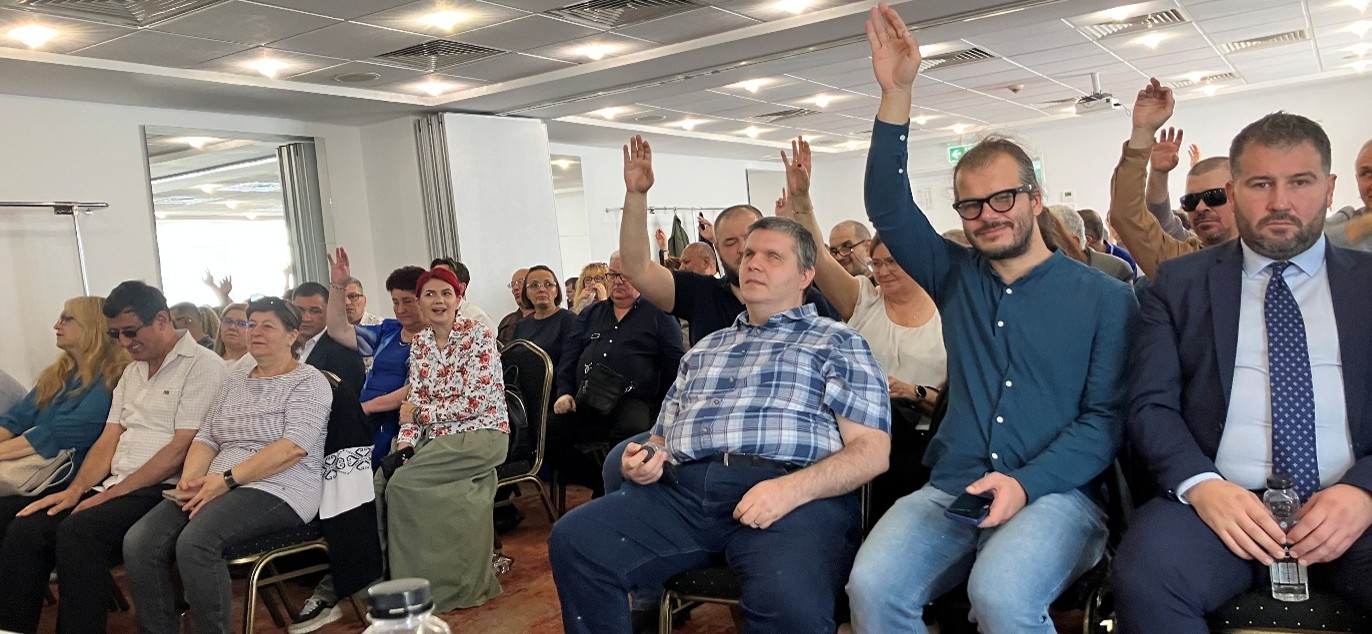
General Assembly 2026 of the Romanian Association of the Blind, delegates from 33 regional branches voting.
School Visits
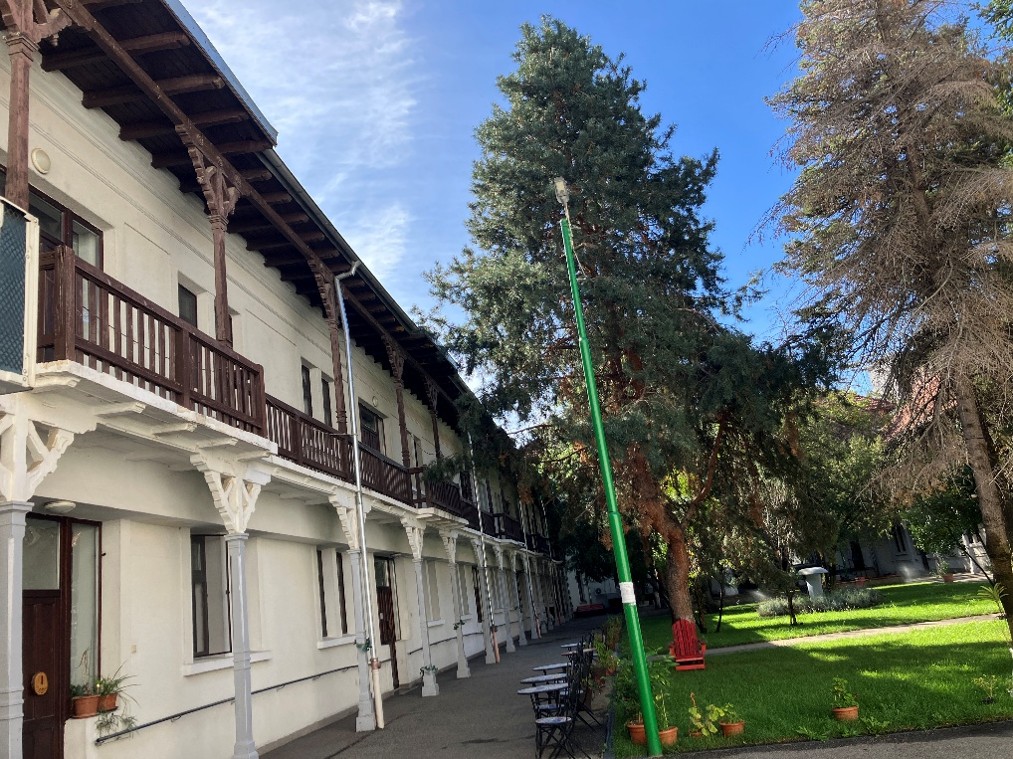
Vatra Luminoasă school visit
After this meeting EBU was invited to visit two special schools that each welcome around 150 pupils, the Vatra Luminoasă school (which has primary, highschool and also post-secondary vocational school) that welcomes teenagers and young people between 14 and 24 years old, and the Primary School for Visually Impaired that teaches children between 3 and 14 years old (kindergarten and primary school). We were welcomed by their directors, Mrs. Nicoleta Ruba and Ms. Cosmina Cazan and shown around by teachers, visiting several classes and discussing the nature of activities and achievement of students. One important discussion, in both cases, revolved about the benefits of special schools where Romanian blind and partially sighted students (but also multiple disabilities ones) are surrounded by a very proficient and caring pedagogical team and benefit from assistive technologies, whereas integrated schools sometimes neglect and ostracise them due to lack of special training and assistance capacity.
Throughout the whole visit Rodica Ionica, in charge of audio books production at the Romanian Association of the Blind, provided very valuable guidance, assistance and interpretation into English.
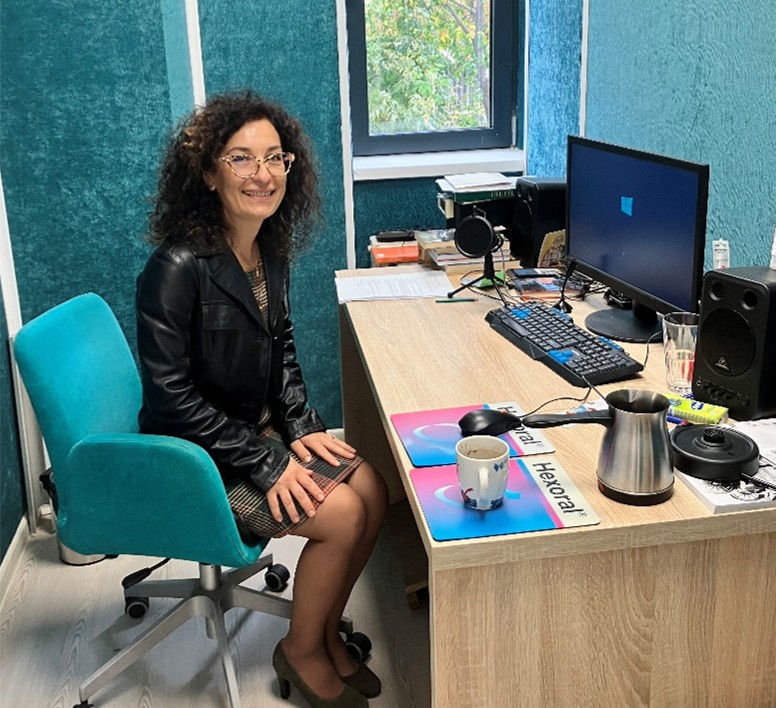
Rodica Ionica in her audio book recording studio
Conclusion
The visit to the Romanian Association of the Blind offered a vivid illustration of how a historic organisation can remain dynamic, relevant and forward-looking. Rooted in a tradition dating back more than a century, the Association has successfully adapted to changing social and political contexts while remaining firmly committed to the rights, dignity and full participation of blind and partially sighted people.
The anniversary celebrations and General Assembly showcased not only the Association’s impressive legacy but also its strong network of partners, dedicated leadership and active membership. For the European Blind Union, the visit reaffirmed the value of international cooperation and demonstrated the vital role that national organisations continue to play in building a more accessible and inclusive society. Through its advocacy, cultural initiatives, educational programmes and community engagement, the Romanian Association of the Blind continues to be a powerful force for positive change, both in Romania and within the wider European blind and partial sight movement.