

The tactile gallery exhibition "Umetnost onkraj vidnega" ("Art Beyond the Visible") opened on March 21, 2025, in Kromberk as part of the European Capital of Culture GO! 2025 initiative. This pioneering project challenges traditional museum norms by encouraging visitors to engage with art through touch, offering a more inclusive experience, particularly for individuals with visual impairments.
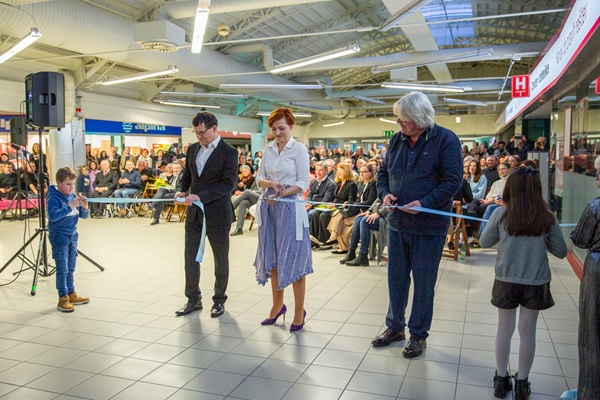
Cutting the ribbon at the opening ceremony
The gallery exhibition serves as both an exhibition and educational center dedicated to accessibility in the arts. The exhibition showcases 40 pieces, comprising replicas of renowned artworks and original creations by artists from Slovenia, Italy, and Croatia. These works span from ancient Greek art to contemporary Slovenian sculpture, providing a comprehensive journey through art history.
To enhance accessibility, the exhibition features audio descriptions for the blind and visually impaired in Slovenian, Italian, and English, as well as sign language interpretations for the deaf in the same languages. A dedicated website and trained guides further enrich the visitor experience, ensuring that the exhibition is accessible to a diverse audience.
The project was made possible through a partnership between the Museum of Gorica and the Regional Association of the Blind and Partially Sighted of Nova Gorica. This collaboration ensured that accessibility measures were designed with direct input from those who would benefit most, making the exhibition truly inclusive. Their expertise and feedback played a crucial role in shaping the gallery's approach to multisensory engagement.
During the initial phase of the project, artists collaborated closely with visually impaired individuals, who provided valuable feedback on how they perceive artistic exhibits. These interactions helped shape the final artworks, ensuring that textures, shapes, and materials were selected to maximize the sensory experience. By integrating direct input from the blind and partially sighted community, the exhibition successfully creates an environment that is both artistically enriching and truly accessible.
Accessibility in museums and galleries is crucial for blind and partially sighted individuals, as it allows them to engage with cultural heritage in a meaningful way. Traditional exhibitions often rely heavily on visual elements, creating barriers for those with visual impairments. By incorporating tactile experiences, audio descriptions, and other assistive technologies, institutions can ensure that art is truly inclusive and available to all, fostering a more diverse and enriched cultural landscape.
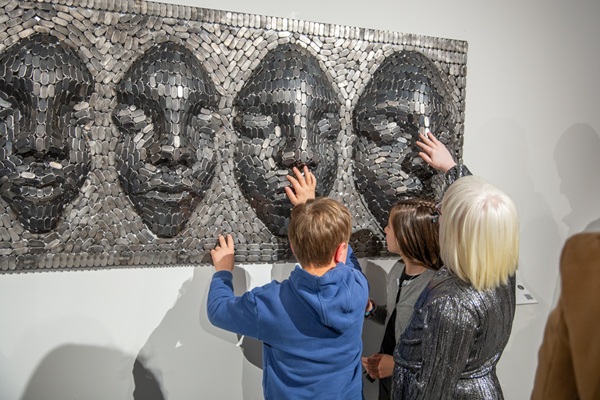
Children and a woman touching tactile faces
David Kožuh, the curator and initiator of the project, emphasizes that "Art Beyond the Visible" transcends the mere removal of physical barriers. It invites all visitors to experience art on a deeper, more personal level by engaging their sense of touch, thereby fostering a space that is welcoming to everyone.
This exhibition not only redefines the interaction between art and its audience but also sets a precedent for future endeavors aimed at making art universally accessible. By prioritizing sensory engagement and inclusive design, "Umetnost onkraj vidnega" paves the way for a more equitable and immersive artistic experience for all.
Moreover, this initiative serves as an exemplary model for other galleries and museums across Europe. By demonstrating the effectiveness of multisensory engagement and direct collaboration with visually impaired individuals, "Art Beyond the Visible" provides a framework that can be adapted to different cultural contexts. Its success highlights the importance of accessibility in the arts, encouraging institutions to integrate similar approaches and promote inclusivity on a wider scale.
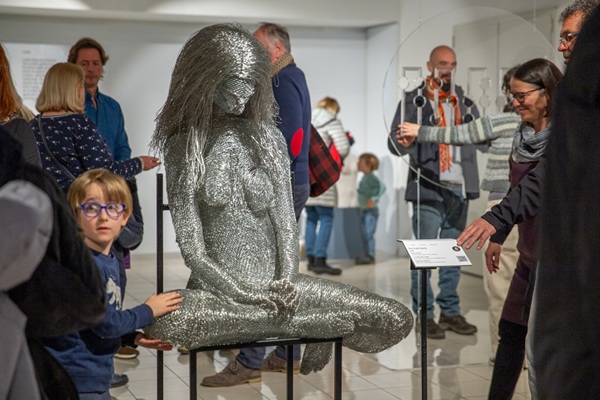
A tactile figure of a seated women surrounded by visitors.
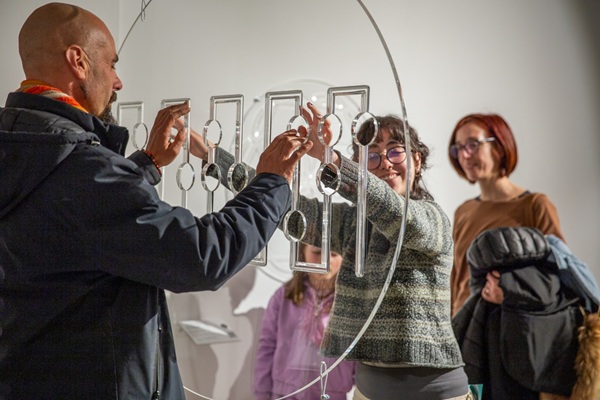
A man and a child on either side of a transparent plastic sculpture
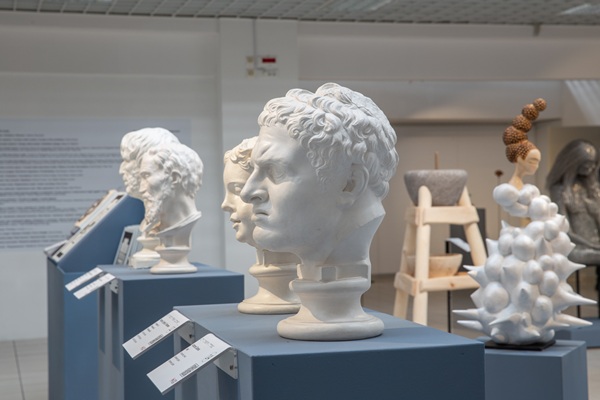
A line of tactile busts with descriptive panels
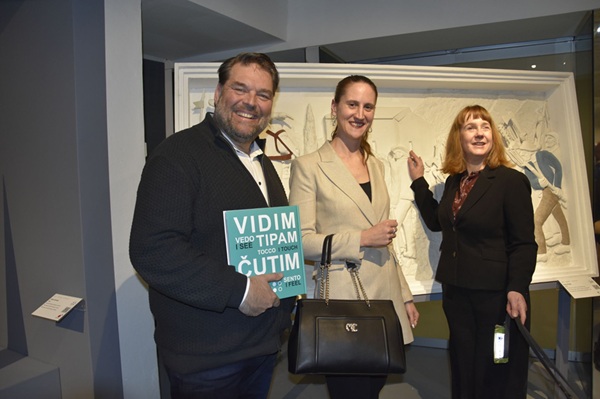
Three of the organisers at the opening ceremony